Facebook
 X
X
 Pinterest
 Copy Link
The House That Was Born the Same Year the Titanic Died
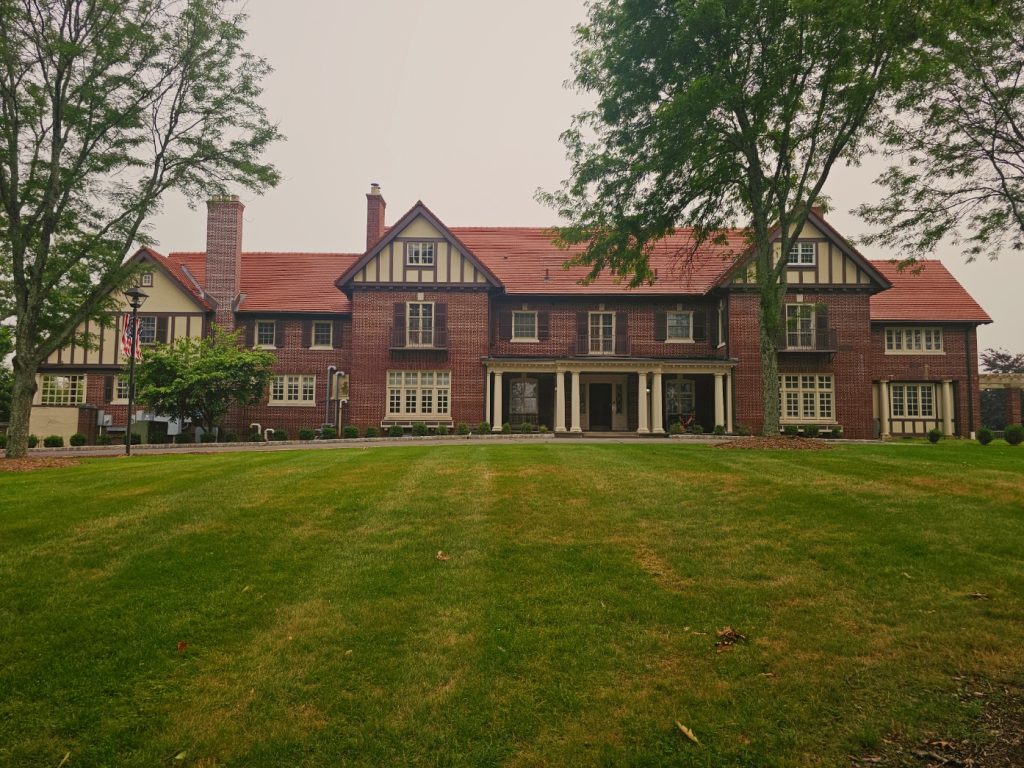
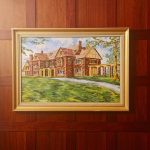
Somewhere behind the folding tables and the zoning notices, behind the fluorescent lights of a municipal building where residents wait in line to pay their water bills, there is a fireplace with a family crest carved into red marble. Almost nobody looks up to see it. But it’s there. A keepsake the building refused to give up, from a life it lived long before it became Basking Ridge’s Town Hall.
This is the story of the house on Collyer Lane, just off South Maple Avenue. You’ve driven past it a thousand times without knowing it once had a name of its own. It’s had four, actually; One for every family who tried to make it theirs.
A Pharmaceutical Fortune Builds an English Dream
In October 1912, a Newark pharmaceutical manufacturer named Samuel Owen and his wife, former Alice Burford, opened their new home,  “Cedar Hill,” on a hilltop of pasture and orchard in Basking Ridge, where they spent six months every year. In July 1913, the Owens sailed for Europe and visited Mrs. Owen’s family. She had British roots.
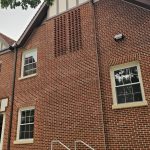
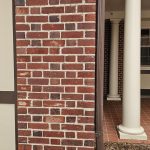
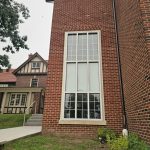
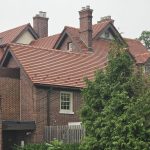
  She was related to the family behind Horlick’s Malted Milk. Upon their return to reflect his wife’s British ancestry, Mr. Owen attempted to reproduce an English country home. Twenty rooms, brick laid in the old Flemish bond pattern, a red tile roof, French doors and pocket doors, mahogany and birdseye maple paneling, and fireplaces of green and rare red marble. In the dining room, under a crystal chandelier, he had the Owen family crest set into the mantel, a small, permanent signature on the house he called Cedar Hill.
Stone walls went up around the whole hundred-acre property. Rose gardens climbed an arbor. Somewhere on the grounds, quietly, was a servants’ cottage and a carriage house, the unglamorous machinery that kept a Gilded Age estate running.
The Owens meant it as a summer retreat. They spent most of the year in Newark, some time in Belmar, and only six months at Cedar Hill.
The Same Year, an Ocean Away
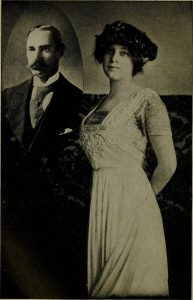 In April of 1912, the very year Samuel Owen broke ground on his English fantasy in Basking Ridge, the Royal Mail Ship Titanic went down in the North Atlantic. Among the dead was John Jacob Astor IV, one of the richest men in America. He helped his pregnant wife into a lifeboat. Four months later, in August 1912, she gave birth to their son: a boy who would grow up never having met his father, born into a fortune and a tragedy at the same time.
That boy was John Jacob Astor VI. And thirty-eight years later, in 1950, he would walk through the front door of Samuel Owen’s house and buy it.
Nobody planned that coincidence. The house didn’t know it was waiting for him. But it’s the kind of detail that makes you look twice at a building you’ve been driving past your whole life. This one was rising out of the ground in Basking Ridge in the same season that a very different story was ending in the freezing Atlantic, and three decades later the two stories would meet in the same twenty rooms.
Three Families, Three New Names
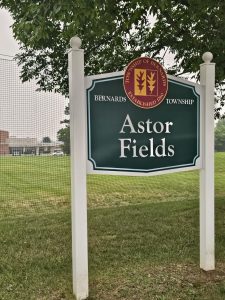
Owen’s dream didn’t last forever. In 1940, the estate was sold to George Ludlow Lee, Sr., the owner of Red Devil Tool Company. A company that started in Irvington, New Jersey. The Lees moved in with their children the first week of June 1940. Lee served on the township’s planning board and became its vice chairman in 1944.
In 1946, the estate was divided into two tracts; a part of it Lee retained in its natural state and a part of it sold to Eugene and Zita Bissell. Lees moved to “Dunleith”, a 52-room mansion in Bernardsville. Eugene was an executive at a New York grain company, and the Bissells gave the old house yet another new name: Maple Way, after the avenue it overlooked. They lived there only four years.
The Lees donated land to the Bernards Township Board of Education to build Cedar Hill School and Ridge High School with their associated athletic fields in 195o’s.
Then, in 1950, Mr. and Mrs. Bissell sold their estate to John Jacob Astor VI.
The Astor Years, and the Empty Ones
John Jacob Astor VI added more land to the estate, further expanding it. He is remembered locally less for living grandly in the mansion and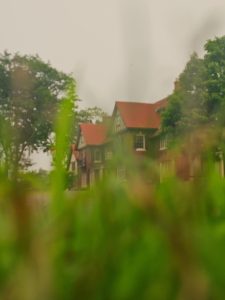 more for the fact that he mostly didn’t. His actual residence was a smaller home down the road on Lake Road, while the great house on the hill sat above the town like a monument to a life he wasn’t quite living in it.
By 1960, the house was vacated altogether. For eight years, it stood empty on its hilltop, a twenty-room English manor with nobody in it, marked for demolition at one point. Somerset County had already started buying up the surrounding farmland in the 1960s for what would eventually become the 900-acre Lord Stirling Park, and the old Astor dairy farm across the road went the same way. The estate that once controlled the view in every direction was being absorbed, piece by piece, back into public land.
In 1968, Bernards Township stepped in and bought the house and its remaining acres for $140,000 — a fraction of what it had cost to build, let alone furnish. Instead of the wrecking ball, the house got a second  life: town offices, a police wing added in 1974, and by 1975, for the first time, a single home for township government under one roof.
What’s Still There, If You Know to Look
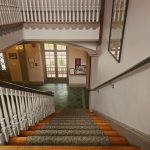
Walk into Bernards Township’s municipal building today, and you’re standing inside Samuel Owen’s love letter to his wife. The crystal chandelier may be long gone, but the red and green marble fireplaces are still there. So is the Owen family crest, quietly set into the dining-room mantel of a room that probably hosts budget meetings now.
And so, according to longtime residents, is something else. Locals have wondered for years whether Alice Owen — the woman this whole English fantasy was built for ever really left. Nobody’s confirmed it. Nobody’s disproven it either. It’s the kind of question this town has been asking itself for decades, half-joking, half-not, every time someone works late alone in the old part of the building.
The house has been Cedar Hill, and Maple Way, and the Astor Estate, and now it’s simply Town Hall. The one name it never chose for itself. Four families gave it four identities. The land gave up its dairy farm to become a park. The view that once belonged to one pharmaceutical fortune now belongs to everyone who drives down South Maple Avenue.
This is the first in an ongoing series on the homes and estates of the Somerset Hills — the stories behind the houses you pass every day without knowing their names. If your family has any memories, photos, or ghost stories connected to this house, I’d love to hear them.