
New Jersey’s Best-Kept Secret is Up in the Hills
A Town Where People Move Once and Stay Forever
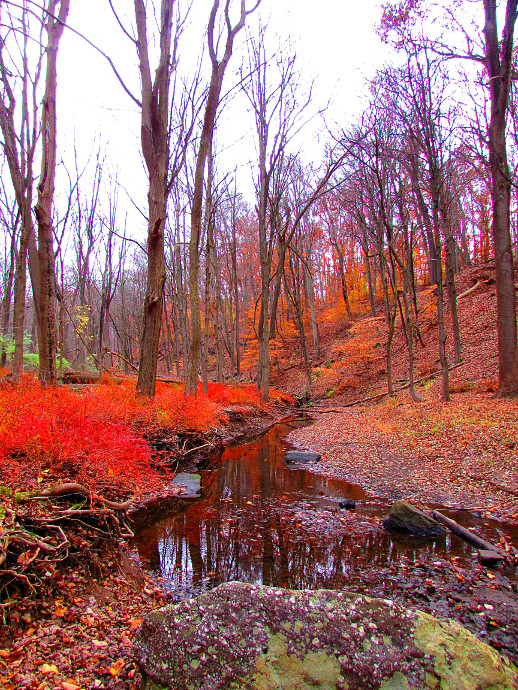
Tucked into the first ridge of the Watchung Mountains just 29 miles west of Manhattan, Watchung is the kind of place that doesn’t need to advertise itself. It has top-rated schools, scenic mountain views, streets quiet enough to walk at night, and a community that actually knows each other’s names. Once people arrive, they tend not to leave. If you’re searching for that rare combination of suburban peace and city proximity, you may have just found it. Before a single house was built here, the Lenni Lenape people already knew this land was special. They called it “Watchung”, meaning “high hills,” and that name stuck for centuries.
Two Worlds Apart, One Woman, One Heart
Before there was a borough, before there were streets or schools or deeds of property, there was a trail through the high hills of central New Jersey and a collision of two worlds on a single moonlit night that could have ended in fire and blood. It didn’t. Thanks to a woman.
This is the founding legend of Watchung. It has been told here for over 350 years. It is the story the borough itself officially embraces. And at its center, quiet and resolute, stands Princess Wetumpka.
Around 1670, a party of Dutch settlers set out from the Amboys, traveling westward and upward along an old Indian path that would one day become Somerset Street, the spine of modern-day Watchung. They were led by a man named Captain Michaelson. Their destination was the fertile valley in the high hills beyond.
Moving in the opposite direction along that same trail was the Watchung tribe of the Lenni-Lenape, making their annual summer migration east toward the ocean, where they would fish and harvest shells to make wampum. They traveled under the authority of Chief One Feather.
With the settlers was an unusual figure, a woman known as Princess Wetumpka, not Lenape herself, but evidently trusted enough by the Dutch to travel in their company. Her origins are lost to time. What remains is what she did.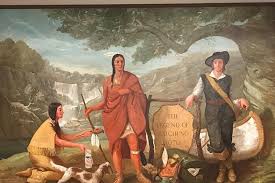
The settlers made camp for the night near what is now the center of the borough. In the darkness, a Lenape advance scout named Deer Prong moved through the trees toward the camp and startled a sentry. The sentry fired. Deer Prong fell.
The skirmish that followed was swift and decisive. Captain Michaelson was captured by the tribe and sentenced as enemies were: to be burned at the stake
The Chief listened. He honored the debt. The captain was released.
What followed was not merely a truce but a genuine peace. The Lenape befriended the Dutch settlers and permitted them to make their home in the valley below. The legend ends not with tension or grudging tolerance, but with ceremony: the marriage of Princess Wetumpka and Chief One Feather, a union that sealed the alliance between the two peoples and gave this land its future.
Watchung will celebrate its centennial in 2026. The legend of Princess Wetumpka remains the borough’s origin story, told in its official records and depicted in a mural in the demolished Sears building on Route 22.
George Washington stood here. Your Commute Will Be Fine.
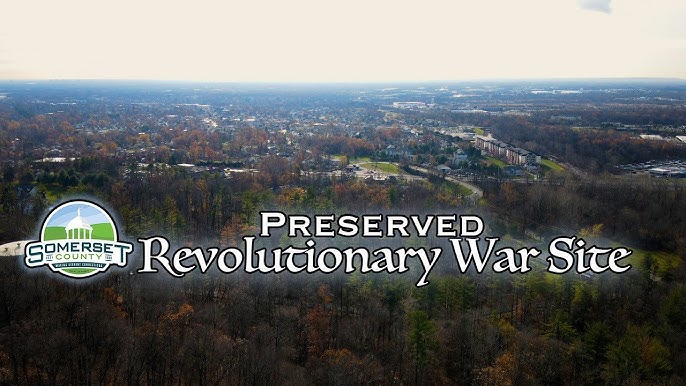 During the Revolutionary War, General George Washington used the first ridge of the Watchung Mountains to survey British troop movements in Perth Amboy, 20 miles away. That same elevated geography that gave Washington a strategic advantage now gives residents something just as valuable: distance from the city, without being cut off from it. Route 22 clips through the borough’s edge, and commuters have long found Watchung to be one of Somerset County’s most practical places to call home.
The Quiet Wealth No One Talks About
Watchung doesn’t make noise about its affluence, but the numbers speak for themselves. With a median household income of $153,341, nearly double New Jersey’s statewide median, and home values that placed it among Forbes’ most expensive ZIP codes, this is unambiguously a premium address. Yet it rarely gets lumped in with the flashier towns of Morris or Essex County. That distinction, real wealth without the pretense, is part of what makes it so attractive to buyers who’ve done their homework.
Mountains in Your Backyard That Scientists Actually Study
Most suburbs in New Jersey offer a park. Maybe a pond. A few benches and a walking path that loops back to the parking lot in twenty minutes. Watchung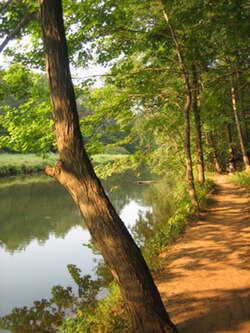 offers something categorically different. The Watchung Mountains, the ancient volcanic ridgeline that gives this borough its name and its character, are not decorative. They are alive, scientifically significant, and largely wild in a way that surprises everyone who discovers them for the first time.
The ridges are composed of basalt, a dense volcanic rock formed hundreds of millions of years ago when magma pushed through the earth’s surface and cooled into the dramatic landscape you see today. That geology created something rare: isolated micro-ecosystems that exist nowhere else in the region. Researchers have documented plant species found only in these specific conditions, wildlife populations that have quietly survived suburban sprawl all around them, and mineral deposits that continue to attract geological study. Most notably, the mountains contain what scientists formally classify as globally imperiled trap rock glade communities, open rocky outcroppings with a unique combination of soil, light, and drainage that supports vegetation found in almost no other place on earth. It is, by any scientific measure, an extraordinary piece of landscape to have at the end of your street.
The water tells its own story. The Stony Brook rises in Warren Township and flows westward through Watchung borough, feeding into Watchung Lake before narrowing and cutting through a dramatic gorge in the first mountain ridge, a passage that has shaped the land here for millennia and still carves its way through rock the way it always has. On a quiet morning, standing at the gorge, it is genuinely difficult to remember that Manhattan is less than thirty miles away.
For residents, all of this translates into something practical and rare. The Watchung Reservation, a county-managed preserve spanning more than two thousand acres, sits directly accessible from the borough, offering miles of hiking and equestrian trails, forested ridgelines with sweeping views across the New Jersey skyline toward New York City, and the kind of deep, uninterrupted quiet that most people drive hours to find on a weekend. Birders, trail runners, families with young children, and people who need to decompress after a week in the city all use it, often daily. The Trailside Nature and Science Center sits within the reservation, offering educational programs that connect residents, especially children, to the natural systems surrounding them by providing access to thousands of acres of trails through the Watchung Reservation, making this one of the few suburban addresses in New Jersey where you can genuinely lose yourself in wilderness within ten minutes of your front door.
What makes this genuinely unusual from a real estate perspective is the combination of access and preservation. This is not a manicured greenway. It is not a landscaped buffer between subdivisions. It is a functioning, ecologically significant natural landscape that happens to sit within minutes of homes, schools, and a Route 22 on ramp. In most of the country, you choose between nature and convenience. In Watchung, you do not have to make that choice.
The Town That Thought Martians Were Invading
It was the night before Halloween, on October 30, 1938. A 23-year-old Orson Welles broadcast his infamous radio dramatization of “The War of the Worlds,” and Watchung’s residents, hearing reports of Martian landings in nearby Grover’s Mill, panicked along with the rest of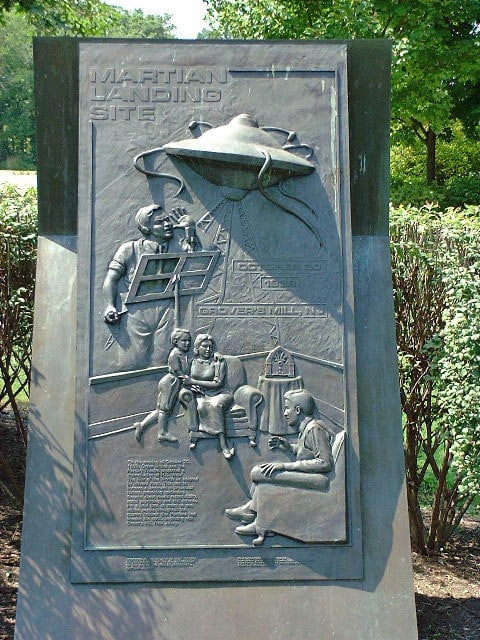 New Jersey. The state actually deployed National Guard troops to the Watchung hills to protect citizens from the imagined alien invasion. It’s a footnote in national history, but a vivid one, and it’s documented on a vinyl recording of the era’s news broadcasts that the borough still preserves.
Orson Welles was claiming that alien invaders had killed 7,000 soldiers and were marching through the Watchung Mountains and into the swamps of northern New Jersey toward New York City. The Watchung Mountains were not a backdrop in this story; they were named as the actual battlefield.
The program was presented live as a simulated newscast of developing events, and the illusion of realism was strengthened because the show aired without commercial interruptions. Many listeners who tuned in late missed the opening announcement that it was fiction. To them, it sounded exactly like a breaking news emergency unfolding in real time, right outside their windows.
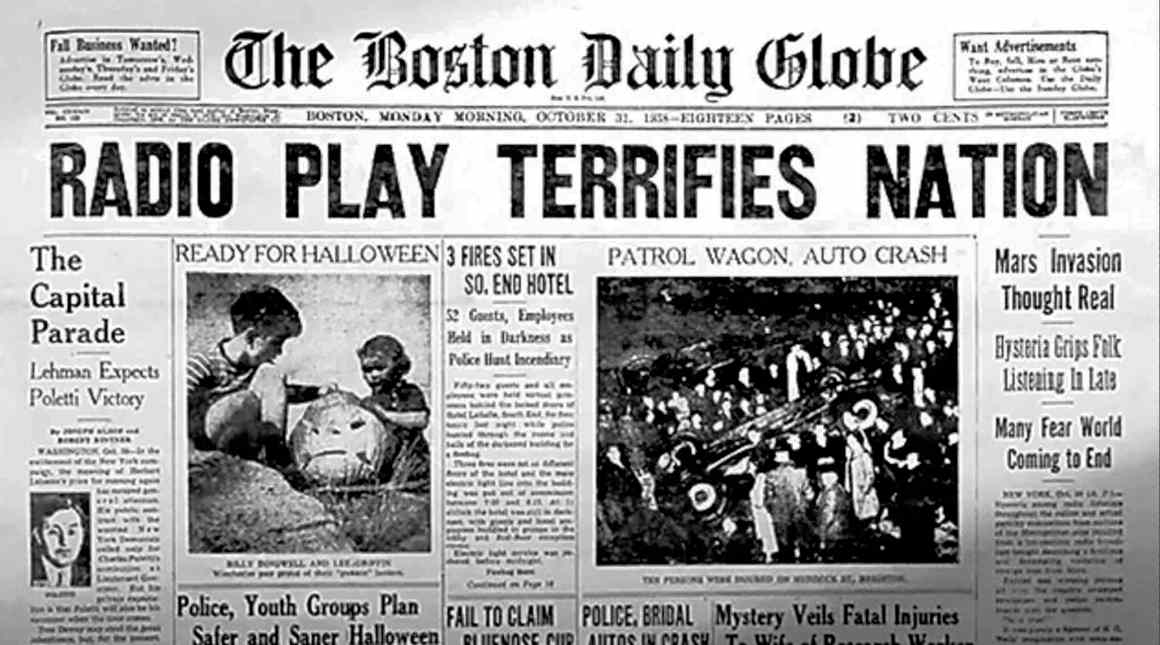
The Daily Record’s October 31 edition described the pandemonium as people running screaming through the streets, taking children out of theaters, and fleeing wildly from one place to another. They fled their homes, squad cars and ambulances roared through Newark, and newspaper and press association offices throughout the country were besieged with telephone calls demanding to know about a meteor that had fallen in New Jersey. A report spread through Newark that the city was to be the target of a gas bomb attack. Police headquarters received an estimated 2,000 queries within a single hour.
Because the broadcast named the Watchung Mountains as the location where Martian war machines were marching and spreading black smoke, residents of the hills had particular reason to panic. National Guard troops were actually deployed and stationed around the hills in Watchung as a precaution.
So listeners heard their own hills named as the frontline of a military defense against an alien army. In real time. Sounding like a live news report.
Imagine being a Watchung resident in 1938, sitting by your radio on a Sunday night, hearing your own mountains named as the location where the army just fired on alien tripods, followed by silence and the sound of men choking to death. Then, looking out your window at those same dark hills. It is not hard to understand why people panicked.
They Once Harvested Ice Here. Seriously…
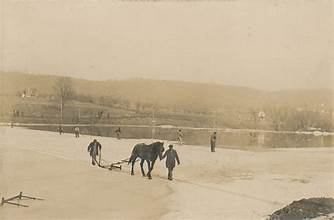
Before Watchung was a residential borough, its two lakes had a working economy of their own. Every winter, when the lakes froze solid, local workers would cut and harvest the ice commercially, one of the few industries the early settlement supported.
The purpose of those lakes has completely flipped today. People walk dogs where ice cutters once risked falling through, and kids fish where blocks of ice were stacked for transport. The lakes are valued for calm and scenery, not anymore for survival and income.
One of those lakes, Watchung Lake, wasn’t just a quiet ice source. It was part of a regional winter supply chain before refrigeration existed. Ice cut from the lake was stored in insulated icehouses packed with sawdust and then shipped to nearby towns and even cities like New York City, where it ended up in butcher shops, homes, and early restaurants. In other words, something as ordinary as a summer drink in Manhattan might have depended on a frozen pond in Watchung months earlier.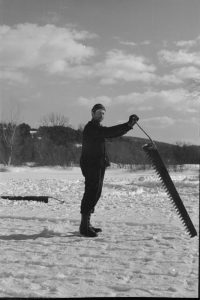
Workers would score the ice into grids, then use long saws to cut perfect blocks. Horses or sometimes sheer manpower would drag the ice to shore. It was dangerous, brutally cold work, and timing mattered: one warm spell could ruin the entire season’s income.
The second lake, Best Lake, played a quieter role but followed the same rhythm, freezing into an economic asset each winter, then returning to a natural gathering place in warmer months. That seasonal dual identity, industry in winter, leisure in summer, is something most modern suburbs have completely lost.
And the preservation piece matters more than it seems. The Texier House Museum isn’t just a small museum. It’s a reflection of a very specific kind of town culture. It’s run by locals, open limited hours, and exists purely because residents chose to protect their own story instead of letting it disappear. Many towns had similar histories; very few bothered to keep them alive.
A Small Town With an Outsized Legacy
Watchung has quietly attracted an unlikely roster of notable residents over the decades, the kind of place where influence hides in plain sight. Bjarne Stroustrup, the computer scientist who created C++, once lived here while working just minutes away at AT&T Bell Labs, one of the most important innovation centers in modern history—meaning that in the midst of Watchung’s quiet, wooded streets, the foundations of today’s digital world were being written. The borough has also been home, at different times, to sports figures like Bobby Thomson, famous for the “Shot Heard ’Round the World,” and Billy Ard, adding another layer to its unexpected reach. The historic Eaton House, listed on the borough register, once housed Charles Aubrey Eaton, a long-serving member of Congress who played a meaningful role in shaping U.S. foreign policy in the mid-20th century. Eaton was involved in discussions around post World War II international cooperation and supported early efforts that helped lead to the formation of institutions like the United Nations. That means decisions connected to global diplomacy and the postwar world were, in part, tied to someone living right here in Watchung.
For a town of just over 6,000 people, Watchung doesn’t simply have history—it has an unusually wide range of connections to technology, politics, and sports, the kind that makes you look twice and realize that places that seem the most quiet are often closer than expected to the people and ideas that shaped the modern world.
Small Enough to Know Your Neighbors. Big Enough to Never Be Bored.
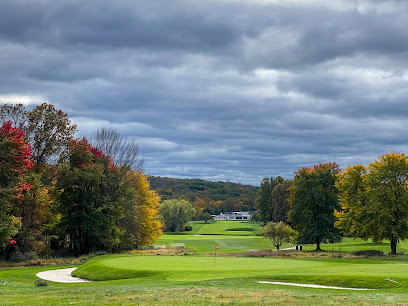 Watchung offers more hands-on experiences than most people realize for such a small borough. The Watchung Arts Center hosts art classes, exhibitions, and live performances throughout the year, giving locals a creative outlet right in their own backyard without having to trek into the city. The Watchung Stables offers horseback riding lessons and trail rides, a surprisingly rare find in suburban New Jersey. The Texier House Museum opens its doors free of charge on select Sundays, where visitors can explore six rooms of local history guided by volunteer storytellers, making it genuinely interactive rather than just dusty display cases. The old borough lakes, once used for ice harvesting in the 1800s, now serve as the centerpiece of a mile-long walking and jogging path surrounded by nature. And for golf enthusiasts, the Watchung Valley Golf Club, founded in 1927, has been welcoming players on Mountain Boulevard for decades. Whether you’re into art, horses, history, or the outdoors, there’s a way to roll up your sleeves and actually participate in what makes this town special.
The kind of place people move to once and never feel the need to leave
May 23rd, 2026, is Watchung’s centennial celebration as an incorporated borough in 1926, one hundred years of quiet excellence in the hills of Somerset County. A century of families who chose this place, stayed, and passed it on to the next generation without a second thought. If you’re thinking about making Watchung your next chapter, you’d be joining a legacy that has been building slowly, deliberately, and without fanfare for a very long time. The hills are still high. The community is still tight. And the kind of place that keeps showing up on people’s lists, not because it shouts, but because it delivers, year after year, decade after decade. Watchung is the kind of place people move to once and never feel the need to leave.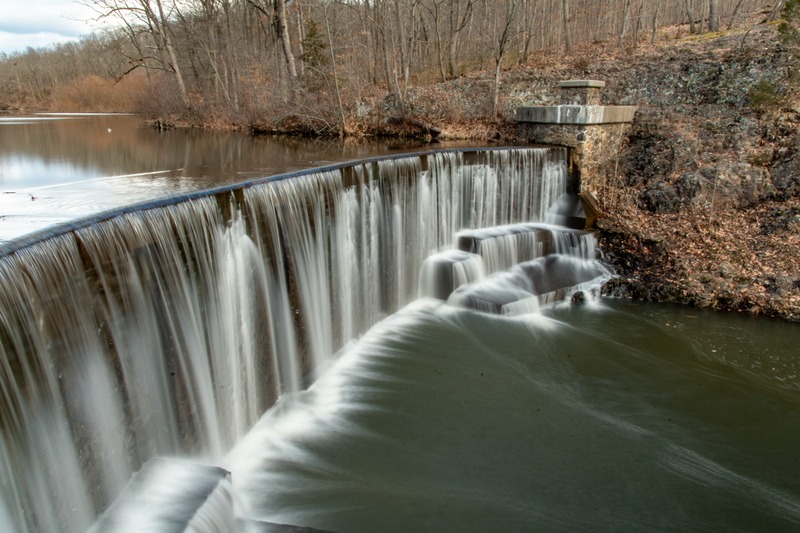
https://watchungnj.gov/